

I actually got the LEGO Plum Blossom set this past Christmas, but I finally pulled the trigger on the build two weeks ago. I was so excited to get into it, and it's been sitting on my shelf ever since, looking cheerful in all its plastic glory.
But as I was looking at those red petals, I realized I've been eyeing the new LEGO Icons Ford Model T set that launched earlier this week. It's a 1,060-piece tribute to the car that changed the world in 1913. It took me back to my teenage years when I used to collect antique Hot Wheels models. I still have them, and there's something about holding a miniature version of a 100-year-old machine that makes history feel tangible.
But it also gives me a bit of whiplash. While I'm over here geeking out on "analog" antiques and plastic flowers, the rest of the world is building actual humanoid robots.
The Machine in the Garden
I'll be honest: robots kind of freak me out. The idea of humanoid machines walking around, interacting with us, performing tasks... there's something unsettling about it. But at the same time, I can't unsee what's already happening.
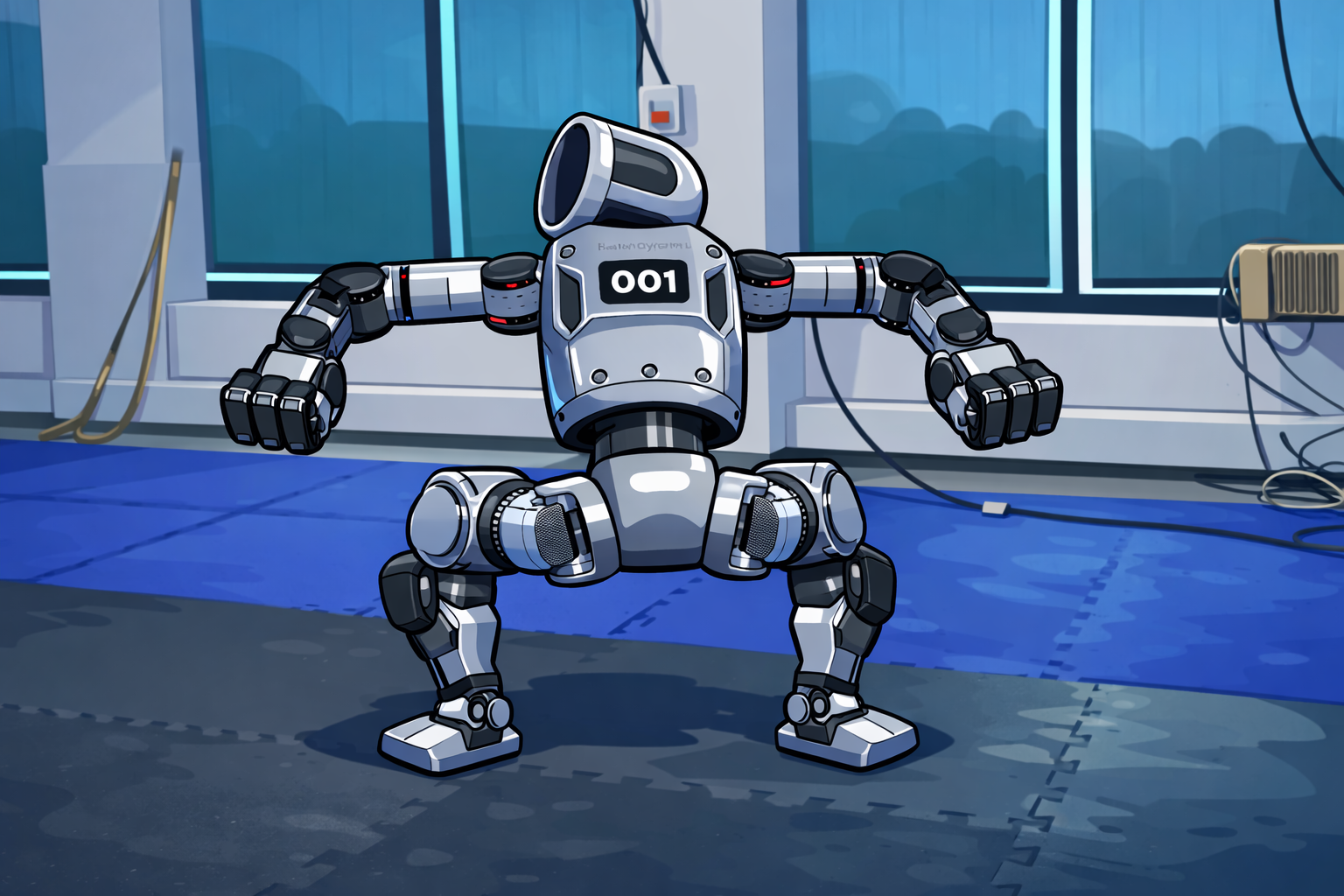
I was watching some footage of the new all-electric Atlas and it's intense. Because it has 360-degree joints, it doesn't stand up like a person. It folds its legs over its head and twists its torso in a way that looks like a scene from The Exorcist.
What caught my attention is how practical this is becoming. Companies like Tesla and Figure aren't just doing novelty experiments anymore. We're talking about robots designed to work in warehouses, assist with elder care, and handle dangerous jobs. The technology has reached a point where the math actually makes sense for big companies.
I keep thinking about the TV series Humans, where "synths" are just convenient appliances until they start developing feelings. Or The Animatrix, where everything goes horribly wrong the second the machines "wake up." That's what scares me. What if that actually happens?
Part of me just isn't ready for humanoid robots walking around. When does "helpful" become too human-like? When does "practical" become dangerous?
I don't have answers, and honestly, part of me isn't sure I want them walking around just yet. But I'm definitely paying attention.
When the Alpha is Just "Dad"
You know how everyone talks about "alpha males" and "alpha wolves" leading the pack? I found this great breakdown over at Scientific American that explains how that's actually a total myth. It turns out the whole concept was based on flawed research from the 1940s.
In the wild, wolf packs are actually just families. The "alpha" wolves? They're just the parents. The "submissive" wolves? Those are their kids. I'd seen this idea play out in shows like Teen Wolf, and I enjoyed it as fiction, but I never realized the concept itself was based on bad science.
It makes me think about how easily these ideas get embedded in our culture, even when they're wrong. David Mech, the biologist who originally popularized the term, has spent decades trying to correct his own mistake. How many other things we accept as fact are actually just outdated research we haven't bothered to correct yet?
It makes me want to dig deeper every time someone confidently states something as universal truth.
Rethinking the "War" on Cancer
I came across this essay on Aeon that made me stop and think about the language we use for illness. We've been told for decades that cancer is a "battle" you "fight."
But what happens when someone dies? Did they not fight hard enough? The language sets up a framework where dying becomes a personal failure rather than a medical outcome. Researchers at Lancaster University found that battle metaphors can cause guilt in terminal patients, while a USC study showed they may reduce preventive behaviors.
It got me thinking: what would we say instead? "Living with cancer" instead of "fighting cancer"? "Going through treatment" instead of "battling the disease"?
The words feel less dramatic, sure, but maybe that's the point. Not everything has to be framed as a war we can win or lose.
The Relaxation Tax
I've been feeling guilty about my screen time lately. All those hours on my phone add up, and I keep thinking about all the other things I could be doing instead. More analog living, you know?
I was reading a piece on The Conversation that explains why our go-to relaxation method might actually be working against us. I don't always feel stressed when I'm scrolling—it feels like I'm just "passing time." But apparently, our brains don't see it that way.
Even when we're not consciously stressed, our minds are still actively processing a constant stream of stimuli. I've noticed this in my own life. I'll spend an hour scrolling before bed thinking I'm decompressing, and then I lie there with my mind racing. Meanwhile, the nights I build something with my hands (like my LEGO) or just sit quietly, I sleep better.
We've mixed up "easy" with "relaxing." Picking up your phone is easy, but it's not always what your brain needs to recover.
Same Plant, Different Soul
Finally, a bit of trivia that blew my mind: did you know that black tea, green tea, white tea, oolong, and pu-erh all come from the exact same plant? I had no idea.
I was looking into the Camellia sinensis plant and it turns out the only real difference is how the leaves are handled after they're picked. The processing, the oxidation, the timing—that's what creates all these different flavors and effects.
What I love about this is how it demonstrates that sometimes the how matters more than the what. You can start with identical raw materials and create completely different results based on how you handle them. It makes me want to do a proper tea tasting and actually pay attention to these differences. Probably won't happen, but it's an intriguing idea.
Until next week.